


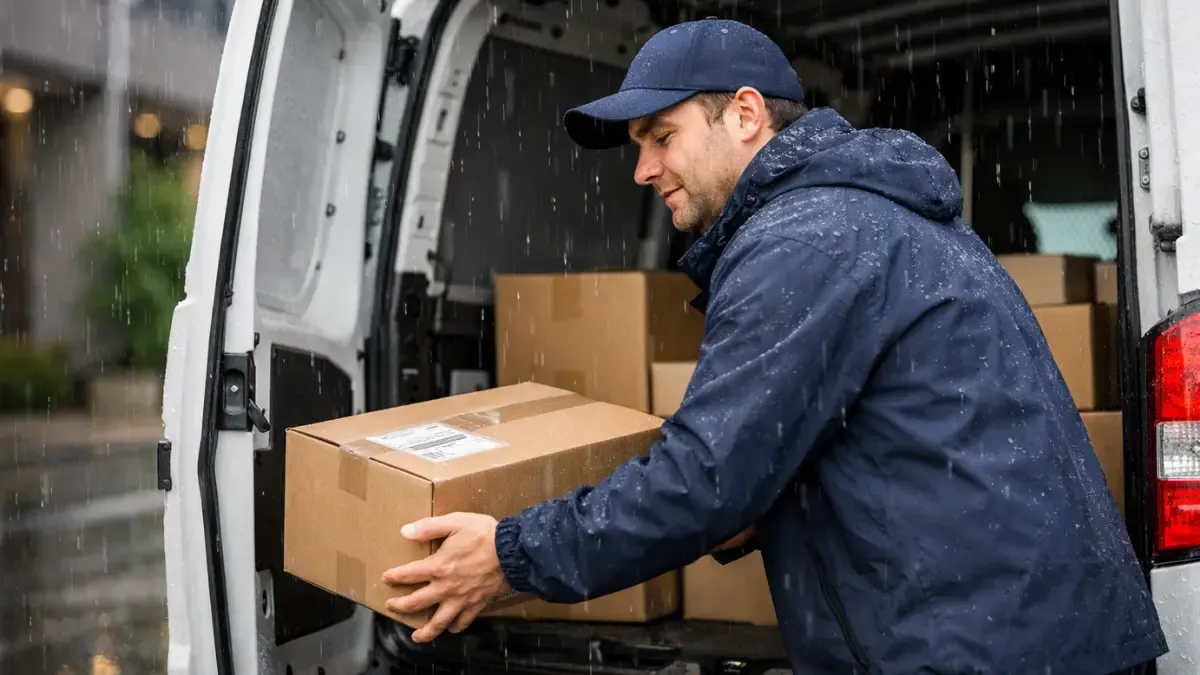
New Jersey doesn't do mild weather for long. A clear October morning can turn into a downpour by lunch, January brings ice on top of snow on top of more snow, and summer storms roll through fast enough to catch an entire delivery route off guard within the hour. Understanding how weather affects local deliveries in New Jersey isn't just a logistics footnote — it's a real factor in whether a package shows up on time, in good condition, and without the driver taking unnecessary risk to get it there. Go FreightMate runs local deliveries across the state year-round, so here's an honest look at how weather actually shapes the process, and what a responsible delivery service does to manage it.
#Why Weather Hits Local Delivery Differently Than Long-Haul Freight
Long-haul freight often has room to route around a storm — take a different highway, delay a day, adjust the whole trip plan. Local delivery doesn't have that luxury in the same way. A same-day or next-day local delivery is built around a tight window, often within a single city or county, which means there's less flexibility to simply wait out bad weather. The driver, the route, and the customer's expectations are all compressed into a much smaller timeframe than a cross-country shipment.
This is exactly why weather planning matters more, not less, for local delivery — the margin for adjustment is thinner.
#Rain: The Most Common Weather Challenge
Rain is New Jersey's most frequent weather disruption, and while it rarely stops delivery entirely, it does slow things down in a few predictable ways:
Slower driving speeds, both from the driver's own caution and increased traffic congestion as other drivers slow down too
Longer loading and unloading times, especially for items that need extra care to keep dry
Higher accident risk on the road, which means routes sometimes need adjusting to avoid known problem areas during heavy rain
A driver moving carefully through a downpour isn't being slow for no reason — they're managing real risk to both the delivery and their own safety.
#Snow and Ice: When Delivery Timing Really Shifts
Winter weather is where local delivery schedules see the most noticeable impact. Snow-covered or icy roads slow travel significantly, and in the worst conditions, certain routes may need to be delayed or rescheduled entirely until roads are safely passable. This isn't a decision made lightly — it comes down to protecting both the driver and the cargo, since an accident caused by pushing through unsafe conditions costs far more time and money than a short delay would.
A few things typically happen behind the scenes during winter weather events:
Routes get prioritized based on urgency and road conditions, rather than strictly first-come-first-served
Drivers are given more flexibility on timing to avoid rushing through hazardous conditions
Customers are updated proactively if a delivery is likely to be delayed, rather than left wondering
#Summer Storms and Sudden Weather Shifts
New Jersey summers bring their own version of the problem — fast-moving thunderstorms that can appear with little warning. These storms are often short but intense, with heavy rain, lightning, and sometimes high winds that make it genuinely unsafe to be loading or unloading a vehicle outdoors. A responsible delivery service builds in enough flexibility to pause briefly during the worst of a storm rather than pushing a driver through conditions that put them or the cargo at risk.
#How Real-Time Tracking Helps During Weather Delays
This is where technology makes a real difference for both the business shipping the order and the customer waiting on it. With real-time tracking, delays get flagged as they happen rather than surfacing hours later as a confusing gap in status updates. Instead of a customer wondering why their delivery is late, they can see exactly where things stand and get an updated, realistic ETA rather than a vague promise. This kind of visibility, paired with proactive communication, goes a long way toward keeping customers patient during weather-related delays rather than frustrated by silence.
#What a Good Delivery Provider Does Differently in Bad Weather
Not every delivery service handles weather the same way. A provider genuinely built around reliability typically:
Monitors local forecasts and road conditions actively, rather than reacting only once a driver reports a problem
Adjusts routes and scheduling proactively during storms, rather than pushing every delivery through on the original timeline
Keeps customers informed with updated ETAs rather than leaving them guessing
Prioritizes driver safety, understanding that a short delay is always preferable to an accident
This kind of proactive handling is part of why a dedicated local delivery platform often manages weather disruptions more smoothly than an informal or ad hoc delivery arrangement — there's an actual system behind the decision-making, not just one driver improvising in the moment.
#What Businesses Can Do to Plan Around NJ Weather
For businesses relying on local delivery, a bit of planning helps reduce the impact of weather disruptions:
Build a small buffer into delivery promises during high-risk weather seasons, particularly winter
Communicate proactively with customers if a weather event is forecast that might affect timing
Choose a delivery partner that offers real visibility into shipment status, so delays are transparent rather than a mystery
Avoid scheduling, especially time-sensitive deliveries, during forecasted severe weather when it can be reasonably avoided
#Final Thoughts
How weather affects local deliveries in New Jersey comes down to a simple trade-off: pushing through unsafe conditions to hit an exact time, or accepting a short, well-communicated delay that keeps everyone safe and the cargo intact. Rain slows things down modestly, snow and ice can shift timing more significantly, and summer storms bring their own short bursts of disruption. What separates a good delivery experience from a frustrating one isn't whether weather happens — it always does eventually — it's whether the provider handles it with real-time visibility, proactive communication, and sound judgment about when to adjust the plan.
#Frequently Asked Questions
#1. Does rain typically cause major delivery delays in New Jersey?
Usually not major delays, but it does slow things down through reduced driving speeds and increased traffic, which can add time to a delivery window.
#2. How does snow affect local delivery scheduling?
Snow and ice are the most disruptive weather conditions for local delivery, sometimes requiring routes to be delayed or rescheduled until roads are safely passable.
#3. Can I track my delivery in real time during a weather delay?
Yes, with a provider offering real-time tracking, you can see updated status and ETAs during weather-related delays rather than being left without information.
#4. Do delivery drivers ever refuse to drive in bad weather?
Responsible providers prioritize driver safety, which sometimes means pausing or rescheduling a delivery during particularly hazardous conditions like severe storms or ice.
#5. How can businesses reduce the impact of weather delays on customer deliveries?
Building in a small time buffer during high-risk weather seasons and choosing a delivery partner with real-time tracking both help manage customer expectations during unavoidable delays.