


Getting a product made or manufactured is one thing. Getting it from your shelf to a customer's front door is a completely different challenge, and it's usually the part small business owners figure out last — often after a customer complains about a late order. Last-mile delivery for small businesses covers that final, often trickiest leg of the journey: the short hop from a warehouse, store, or fulfillment point to the customer's actual location. It sounds simple, but it's also the stage where cost, speed, and customer experience collide the hardest. Go FreightMate works with small businesses across New Jersey navigating exactly this decision, so here's a practical rundown of the real options available.
#Why Last-Mile Delivery Is Harder Than It Sounds
The last leg of delivery is disproportionately expensive and complicated compared to the rest of the shipping process. Routes are shorter but less efficient, since a driver might make a dozen stops across a small area instead of one long haul. Customer expectations are also highest at this stage — people don't usually notice how a product traveled across the country, but they absolutely notice if it shows up late, damaged, or with no communication along the way.
For a small business without an existing logistics team, figuring out the right approach here can feel overwhelming. The good news is there are really only a handful of realistic paths, and most businesses land on one fairly quickly once they understand the trade-offs.
#Option 1: Using Your Own Staff and Vehicles
Some small businesses, especially ones already running a retail location, start by having an existing employee handle deliveries using a personal or company vehicle. This works for very low delivery volume, where the cost of formalizing a delivery process doesn't yet make sense.
The upside is control — you know exactly who's handling your customer's order and how. The downside shows up fast as volume grows: an employee delivering packages isn't doing their actual job, vehicle wear and insurance become real considerations, and a single sick day or busy afternoon can derail the whole delivery schedule.
#Option 2: National Carriers (UPS, FedEx, USPS)
For many small businesses, national carriers are the default simply because they're familiar and widely available. They work well for standard package sizes and longer-distance shipping, but they're not always the most practical or cost-effective choice for strictly local, same-day delivery needs, since they're built around broad, standardized networks rather than hyper-local speed.
#Option 3: Dedicated Local Courier and Delivery Platforms
This is where small freight and local delivery services come in, and it's increasingly the option businesses turn to once they outgrow doing deliveries themselves. Small freight delivery offers a flexible solution for transporting smaller shipments quickly and efficiently, without requiring a full truckload or a long-term logistics commitment. These platforms match businesses with available local drivers on demand, which keeps costs tied directly to actual delivery volume rather than fixed overhead.
This option tends to work especially well for:
Retail inventory replenishment between locations
E-commerce orders that need fast, regional delivery
Marketplace purchases or oversized items that don't fit standard parcel shipping
Businesses needing same-day delivery without maintaining their own fleet
#Should a Small Business Use Its Own Drivers or a Delivery App?
This is probably the single most common question small business owners ask once delivery volume starts picking up. The honest answer depends on volume and consistency.
Your own drivers make more sense when:
Delivery volume is low and predictable
Deliveries happen within a very tight, familiar area
You have staff with genuine downtime to absorb the task
A delivery app or platform makes more sense when:
Volume fluctuates or is growing
You need same-day or time-sensitive delivery without hiring dedicated staff
You want tracking and proof of delivery without building that infrastructure yourself
You're trying to control costs without taking on vehicle, insurance, and liability overhead
Most growing small businesses eventually shift toward a delivery platform simply because the economics stop making sense once an employee is spending more time driving than doing their actual job.
#What Is the Cheapest Way to Deliver Products to Customers Locally?
Cost is often the deciding factor, and the honest answer here depends on volume more than anything else. For very low, occasional delivery needs, using existing staff is technically the cheapest option on paper, though it carries hidden costs in lost productivity and vehicle wear. For consistent or growing delivery needs, an on-demand local delivery platform tends to be more cost-effective than it initially appears, since you're only paying for deliveries actually made, rather than a fixed salary, vehicle, insurance, and fuel cost regardless of how busy a given day is.
National carriers, by comparison, often make the most financial sense for standard-sized packages traveling longer distances, but tend to lose their cost advantage for strictly local, same-day delivery compared to a dedicated local courier service.
#Finding Affordable Last-Mile Delivery Without Sacrificing Reliability
Affordable doesn't have to mean unreliable. The key is matching the delivery method to actual need rather than defaulting to whatever's most familiar. A few practical ways to keep affordable last mile delivery realistic without cutting corners:
Use on-demand delivery for peak periods instead of staffing for your busiest day year-round
Choose a platform offering real-time tracking and proof of delivery, which reduces costly customer service time spent answering "where's my order"
Compare delivery methods by total cost, not just per-delivery price, factoring in staff time, vehicle wear, and customer service overhead
Scale delivery method to order volume rather than locking into one approach regardless of how the business grows
#Communication Matters as Much as the Delivery Itself
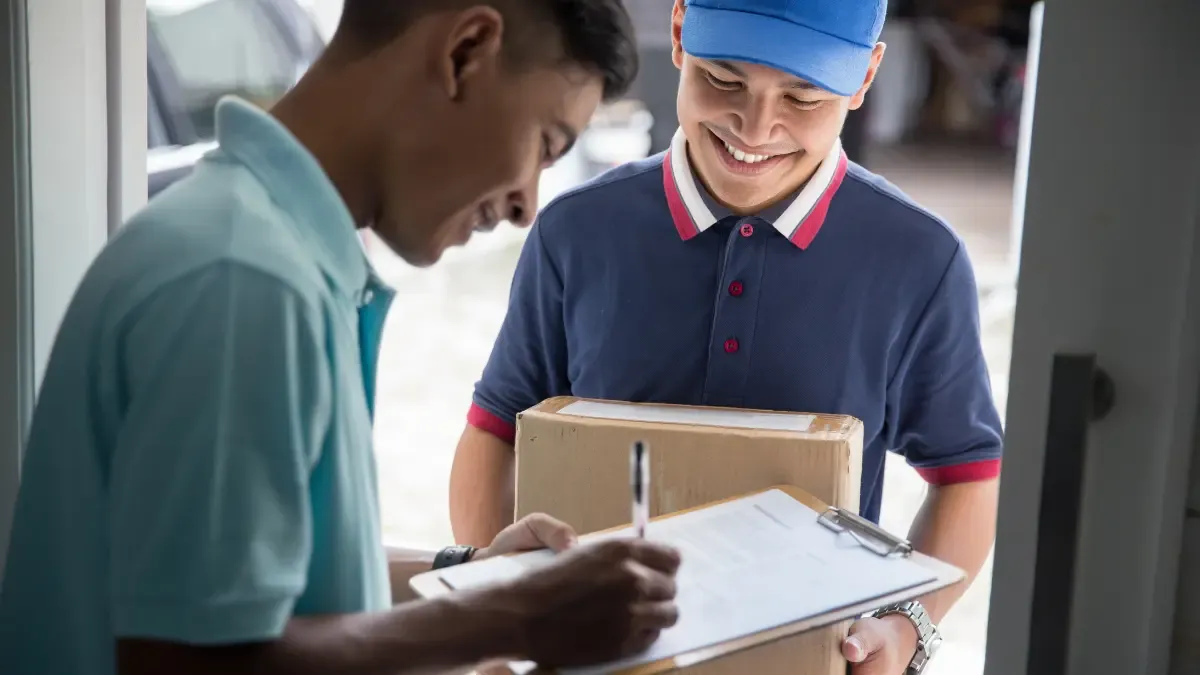
Whatever method you choose, how well you communicate with customers during delivery often matters as much as the delivery itself. A platform offering proof of delivery functionality, including photo confirmation, gives both the business and the customer a clear, documented handoff rather than relying on guesswork. This kind of visibility cuts down significantly on customer service time spent chasing down delivery status.
#Final Thoughts
Last-mile delivery for small businesses isn't a one-size-fits-all decision — it depends on volume, how time-sensitive your deliveries are, and how much overhead you're willing to take on versus pay for on demand. Using your own staff works at a very small scale, national carriers suit standard package shipping, and dedicated local delivery platforms tend to offer the best balance of cost and reliability once volume grows past what one employee can reasonably handle. The right choice isn't necessarily the cheapest option on paper — it's the one that actually scales with your business without constantly eating into staff time or customer trust.
#Frequently Asked Questions
#1. What are the main last-mile delivery options for a small business?
The main options are using existing staff and vehicles, national carriers like UPS or FedEx, and dedicated local courier or delivery platforms, each suited to different volume and speed needs.
#2. Should a small business use its own drivers or a delivery app?
Your own drivers can work at low delivery volume, but a delivery app tends to make more financial and operational sense once volume grows or deliveries need to happen same-day.
#3. What is the cheapest way to deliver products to customers locally?
For low, occasional volume, using existing staff is technically cheapest, though it has hidden costs. For consistent or growing needs, an on-demand local delivery platform is often more cost-effective overall.
#4. Is affordable last-mile delivery reliable for small businesses?
Yes, especially when paired with real-time tracking and proof of delivery, which helps maintain reliability without the overhead of an in-house delivery team.
#5. Why is last-mile delivery usually the most expensive part of shipping?
Last-mile routes are shorter and less efficient per stop than long-haul shipping, and customer expectations around speed and communication are highest at this final stage, both of which drive up relative cost.